Logo Fundación Arquia
Logo

Centro de documentación FQ

Si aún no lo conoces te explicamos Qué es el Centro de Documentación FQ de Fundación Arquia

Contacto

Sede Oficinas

C/Barquillo, 6, 1º izda. 28004 Madrid

Sede Actividades Culturales

C/ Tutor, 16. 28008 Madrid

91 756 10 50

centrodocumentacion@arquia.es

Suscríbete

Suscríbete a nuestro boletín para estar al día de las últimas novedades y lanzamientos.

Al suscribirte, aceptas nuestra Política de Privacidad y das tu consentimiento para recibir actualizaciones de nuestra empresa.

© 2026 Centro de documentación FQ. Todos los derechos reservados.

Política de cookiesPolítica de privacidad
Centro de documentación FQ
InicioCatálogoCiclos
Logo

Centro de documentación FQ

InicioCatálogoCiclos
Gothic Cathedrals | Arquia - Centro de Documentación

Cargando audiovisual...

  1. Inicio
  2. /Catálogo
  3. /Audiovisuales
  4. /Gothic Cathedrals
AudiovisualesFilmografía

Gothic Cathedrals

Notre Dame to the National Cathedral

Gothic Cathedrals

Gothic Cathedrals

Descripción

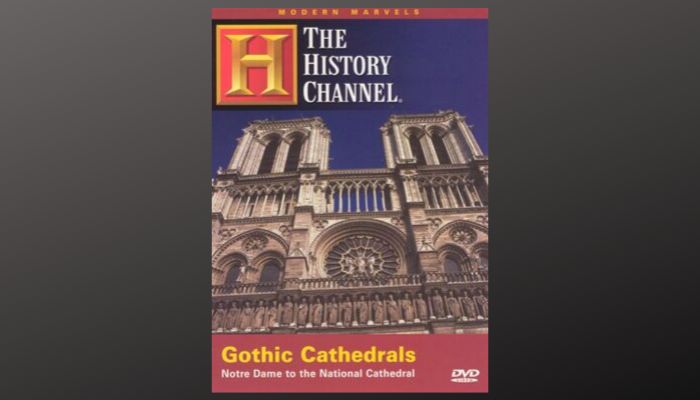
Stone by stone, uncover the mind-boggling truths behind the engineering marvels known as cathedrals - great testaments to faith that have remained virtually unchanged for over 900 years!

From their immense buttresses to the intricacies of their stained glass, the Gothic cathedrals atand as a complex, richly designed celebration of all we hold most scared, and as an articulation of joy and accomplishment. Reaching heavenward, they may be synonymous with mediaval France, but perhaps the most famous lies right here in America.

In 1891, Charles Glover Gathers, a prominent Washington banker, promoted the idea of a National Catheral as a moral center. For the first time on DVD, follow the construction of this massive cathedral - which surpasses even Notre Dame anb Charters in size - and discover how 12th and 20 century methods were combined to raise 300 million pounds of limestone.

Autoría y colaboradores

Director

Thomas, Andy

Productor

The History Channel
Nash, Bruce (1947-)

Música

Page-Pagter, Scott
Valentino, John

Información

Categoría

Filmografía

Tipo de documento

Audiovisuales

Duración

50 minutos

Idioma del contenido

Español

Idioma de edición

Inglés

Año de producción

1994

País de producción

REINO UNIDO

Serie/colección

Modern Marvels

Editorial

A&E Television Networks,

ISBN

0767078705

Tema/Asunto

Documentales

Tema de la actividad

Fichas
Documentales

Tema geográfico

París
Washington

Estilo

Arquitectura gótica

Uso del tema

Catedrales

Formato

DVD

Sección

Filmografía

Instituciones

Fundación Arquia
Nombre: Fundación Arquia
Identificador: 4967

También te puede interesar

Baseball Parks
AudiovisualesFilmografía

Baseball Parks

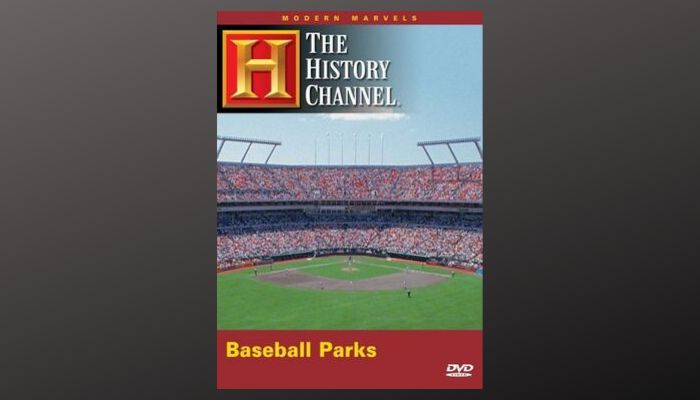
“Son los monumentos más preciados del pasatiempo favorito de Estados Unidos. Dentro de sus muros hemos experimentado una alegría abrumadora, una desilusión aplastante y la pura emoción del juego. En este programa, THE HISTORY CHANNEL-® te trae la cautivadora historia detrás de los parques de béisbol de Estados Unidos: desde los terrenos de arena y los estadios de pelota de madera del siglo XIX hasta las majestuosas maravillas de acero y hormigón de principios de siglo y los estadios monolíticos de usos múltiples de la actualidad. Conozca cómo se realizó por primera vez el concepto del parque de béisbol y cómo las luchas inmobiliarias ayudaron a determinar la forma única de algunos de nuestros estadios más queridos. Descubra cómo el hot dog se convirtió en un elemento básico de la experiencia de ir al estadio y cómo la llegada de las luces del parque en 1935 cambió el béisbol para siempre. Desde los parques comunitarios íntimos de antaño hasta los mega estadios de la era espacial de hoy, explore la cara cambiante de los Baseball Parks de Estados Unidos.

Características del DVD: Menús interactivos; Selección de escena” [Contenedor]

Extrapolating the jewelry scenario to architecture (Conferencia en la Economy Conference 2011 WSA, Julio 2011, Cardiff - R.Unido)
RealizacionesPróxima

Extrapolating the jewelry scenario to architecture (Conferencia en la Economy Conference 2011 WSA, Julio 2011, Cardiff - R.Unido)

We are increasingly less reluctant to recognize our search for commercial success. If we, as a profession, still have any qualms, developers will remind us who is paying for the building. To a lesser or greater extent, most buildings today are designed to be attractive in terms of sales. We are not totally aware that the phenomenon is unstoppable and that it will revolutionize the entire architectural scene.

Let us look at what has happened in the world of jewelry. Ten years ago, the owner of a local jewelry store could believe he had a good business. Shops established over time had an aura of respectability. Customers went to purchase a special gift for a family celebration. Acquiring a jewel was a safe value. It was an investment and savings at the same time, but it also involved enjoying a possession. A diamond, a pearl, a pendant, a watch.

Nowadays, most local jewelry stores are shuttering their premises. It is no longer trendy to wear a pearl set in a ring. No longer is the value jewel in itself the question, but rather the value of the brand. A costume jewelry bracelet is what sells today, if it is associated to a brand. For the same price, we would rather buy a leather bracelet with many beads hanging from it than a “jewel”. Yet, not just any bracelet, but a Dolce & Gabbana one or a Tous capable of convincing society of the value of their products through their incredible marketing campaigns. We have stopped buying real value (gold, silver, and diamonds) and have started to buy fictitious value (a Tous teddy bear).

Leaving the jewelers aside, let’s focus on the imported industrialization of an emerging nation. The result: costume jewelry dominates malls while local jewelry stores close their doors or barely survive by changing old watch batteries. Incredulous jewelers are appalled by this situation. They are the professionals and can therefore define what has value. They are probably right. Yet, market strategies have expelled them from a fiefdom they once ruled over.

Extrapolating the jewelry scenario to architecture, I observe a similar trend. Small craftsmen (architects) will disappear because they do not understand the value of a brand. And they do not understand that competitions are won by a rendering, a slogan, or simply the name of a foreign architect. They do not realize that the profession has changed and that those commissioning projects are looking for new values.

The problem – in this field as well - is determining price and understanding that just as a jewel can be compared with costume jewelry, the value of a building no longer depends on what it costs, nor the value that we experts assign it. The price is defined by the market and is what the market itself will bear. This is where sale strategies appear, as tools that allow us to ensure the value of a building in the future.

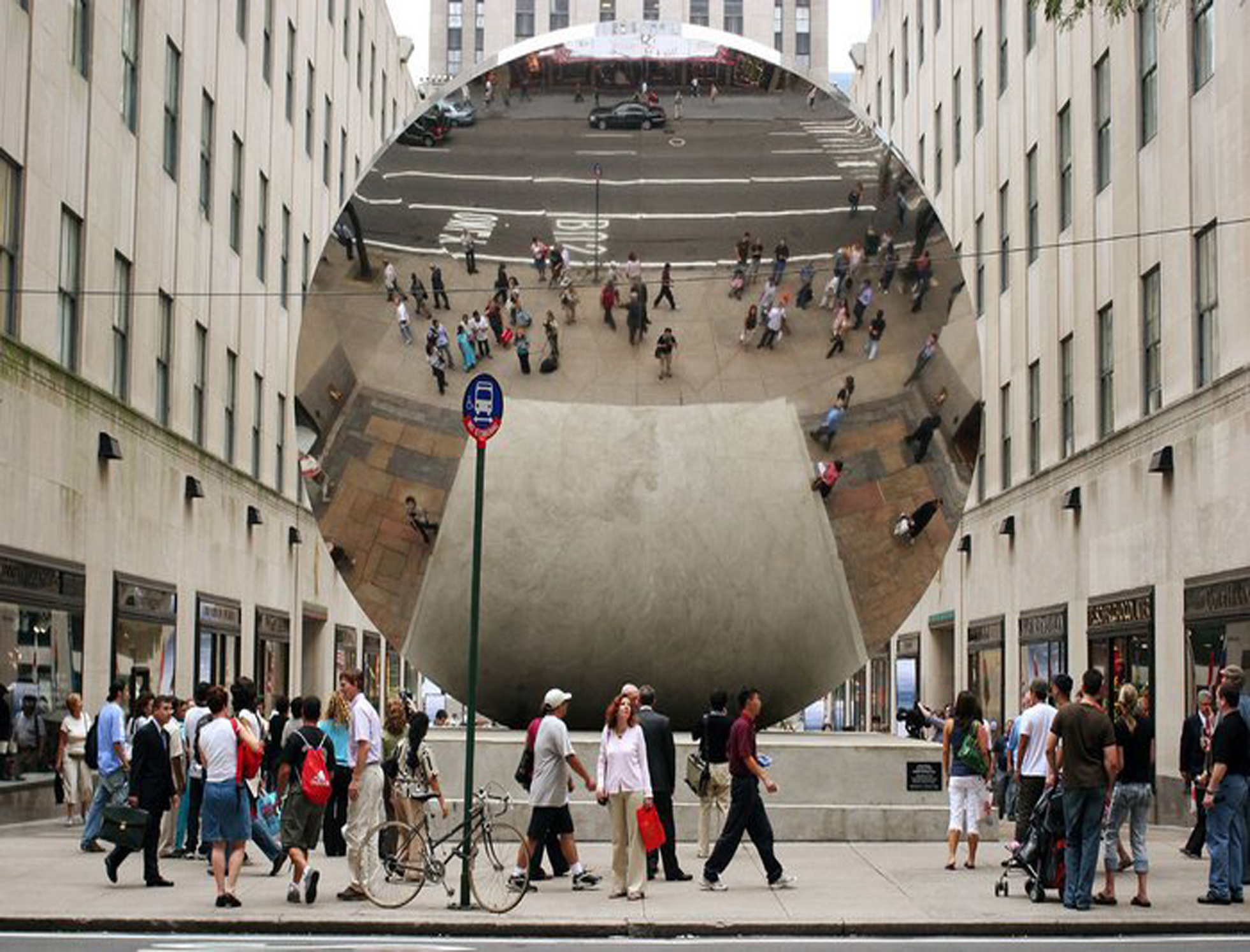
There are cases such as Herzog & De Meuron, who incorporate works of art into their New York skyscrapers. It may seem anecdotal, one more appealing feature of a building. Yet, that is not the case. Anish Kapoor is an English artist-sculptor with Indian roots who is very highly regarded thanks to his installation in the Turbine Hall of London’s Tate Modern, among other works. His “jewel”, the sculpture on the ground floor, cost the developer more than the fees of the world-famous Swiss architects who designed a skyscraper with 145 housing units.

If the developer pays for the sculpture it is because he knows that he can break it up into portions of shares and link every fraction to each apartment. He will explain to each potential buyer that his unit, aside from its appreciation or not as a real estate asset, can also appreciate with its value in the art world.

That is the power of sales strategies.

Architecture & Adaptation: Evolutionary Theory of Space through an Artificial and Individual Human
Proyectos de investigación

Architecture & Adaptation: Evolutionary Theory of Space through an Artificial and Individual Human

Architecture & Adaptation: Evolutionary Theory of Space through an Artificial and Individual Human Being

(Double PhD Research: Never finished, as I need this NY support).

----

(…) We live in a material society, without conscience, and why deny it: hypocritical, with a tendency towards depression, loneliness and isolation. Is architecture related to any of these?

Darwin’s Theory of Evolution states that human beings, as animals, have a penchant for improvement and a tendency to adapt to their surroundings.

Applying this to our way of life, I might ask: Are we the ones adapting to the architecture of a place, or is the architecture of a place adapting to us?

I think the answer is fairly simple: it’s impossible that architecture, something already existing, adapts to us.

But now, what or who is adapting to what?

We have lost the essence, we are adrift and can’t seem to find our way. I recapitulate: Is architecture adapting to people or are we the ones adapting to architecture?

It is a given that something as insignificant as a person, we, the “homo ludens”, can’t control the power of space or the architecture of a place, so the answer must be obvious and clear, no matter how objective we pretend to be, or how we wish it so.

This first installment is also a criticism towards us, architects, with a tendency towards the beauty of a finished building instead of the feelings it would evoke on the people around it.

We must be the ones adapting to the architecture of a place, traditional or not, and to everything around us. We will make it ours, and only then will we control it: Consciously or unconsciously.

Now that the animal, primate, has become man, “homo ludens”, does he adapt to his surroundings?

From my point of view, there are two different answers:

- There are people who are so used to migration and displacement that forget that architecture, and therefore our surroundings, are truly there. Those who unfortunately perceive them (including myself, even if as an architect I shouldn’t), distinguish space as something merely aesthetic or even non-existent.

That is to say, architecture is transformed into something temporal that doesn’t truly exist but is there, always present in a lifestyle of travel and migration. We are so used to moving, that we don’t stop to analyze why are we able to adapt to a way of life that is so utterly different.

All beings think that they don’t fully care about their surroundings, but truthfully, they are capable of adaptation, of processing the architecture of a place, regardless of where that place is, not minding cultural barriers, or even language or climate.

Meaning, that for better or worse, humans adapt to architecture, and in the same way, architecture and space are always unconsciously present in the minds of the people.

- On the other hand, and as I said in the beginning, other types of people also exist. There are ones who associate architecture with something permanent, who are not used (even if it doesn’t sound right) to knowing what exists beyond their front door, and think that is everything that exists in the whole world. They lack spatial awareness. We talk about space because it is truly a sixth sense, always present in ourselves.

These individuals don’t believe in the possibility of architecture existing beyond the four walls of their bedroom, and they don’t want to see, or don’t know, that the culture and tradition of a place leave a mark in a person’s lifestyle.

This, is a fact. There are two kinds of people:

Those that by default move, and the ones who remain static. What they don’t know is that both are affected by the inception of space, they don’t realize that the architecture of a place not only conditions their way of life, but also the way they live in our society, as Darwin mentioned.

I will name these kinds of people the following:

Divergents (those who don’t belong anywhere, but at the same time belong everywhere, as they are temporal, and are the ones included in point 1), and the ones that belong to group 2 (static and permanent, that sooner or later will have to evolve), and called “Homo Ludens”.

Summarizing: DIVERGENTS vs HOMO LUDENS (…)

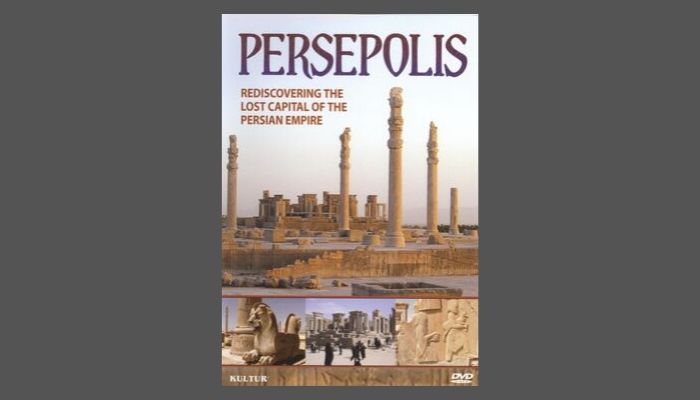
Persepolis
AudiovisualesFilmografía

Persepolis

Rediscovering the lost capital of the Persian Empire
NOVERCA
RealizacionesPróxima

NOVERCA

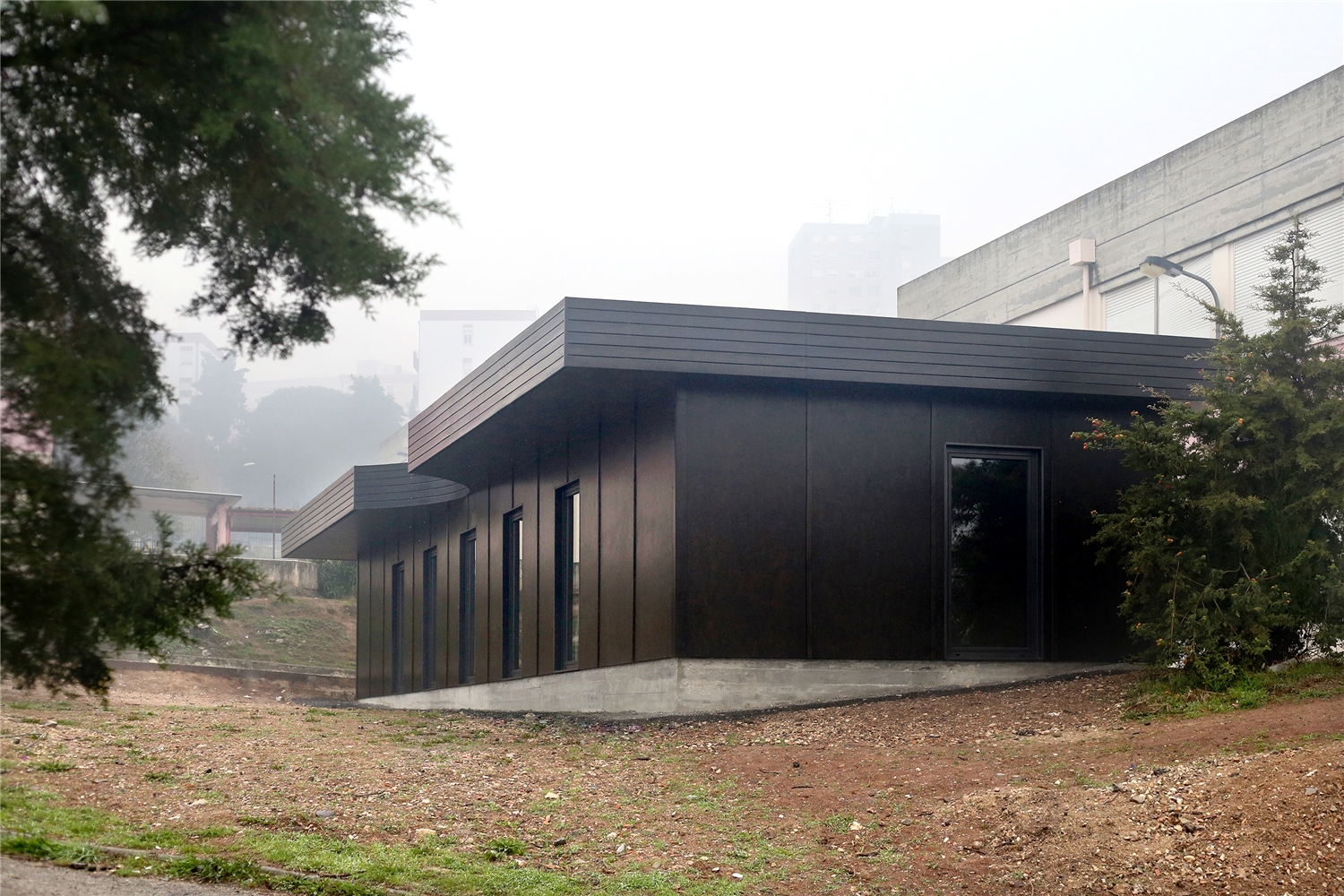
NOVERCA is a project of a multisensory space for the students of Maria Veleda School, in Portugal, and is the result of a process begun about five years ago together with the direction of the school. They wanted to create an autonomous space for multiple handicapped students and there was a lack of resources and founds to actually realize it.

A few years earlier the government had made the decision to integrate all multiple handicapped students in schools without ever creating the necessary conditions for them to have an autonomous teaching space and adapted to their limitations. Ideally these students would have two or three subjects together with the others, and in the rest of the time they would have individual accompaniment in their own space with sensorial equipment. It may be relevant to point out that among all the schools in the country it is extremely rare to have this kind of spaces that certainly facilitate the integration of these students.

We have decided to actively collaborate in this initiative and we had the chance to work together with the professors, the students, and their parents, as well as all the educational community from this region. It was decided to schedule a series of regular meetings in the school with the intention of develop a common project and incorporate the different opinions until we arrive to a final proposal with the lowest cost as possible according with the given conditions.

After a period of five years it was finally possible to guarantee a minimum funding for the project due to the various fundraising events and to the participation in architectural and educational competitions. This step was also possible thanks to the great collaboration of the company Jular which is specialized in wooden construction and has decided to work with us on a new prototype and construction system. Santomargo and Aresta Renovada also gave their great contribution on the works and all of them expressed the solidarity with the initiative.

NOVERCA has approximately 90m2 and works as a small house for those children. It has a small kitchen to learn how to handle household issues, a main activity room, a small study room, a special sensorial space (the snoezelen room), and a bathroom. In architectural terms it consists on a reinforced concrete podium that establishes the horizontal plate on which the whole structure of wood stands. Here all the thin walls work as structural elements helping each other to create the overall unity. Than the roof is create by a set of very thin beams that generate a compact plane that lays all its weight on the top of the walls and stabilize them again. This means that all the elements (walls and roof) contribute to the structural function of the building ad there is no difference between spatial structure and physical structure. Paradoxically, there is only pillar in the whole project that rises up unexpectedly, solitary and massive. It has a raw finishing from the reinforced concrete and runs away from the orthogonality of the space. Although it’s higher than the walls it’s actually lower than the roof and expresses its own condition of being a symbolic element with a strong phenomenological character for the children.

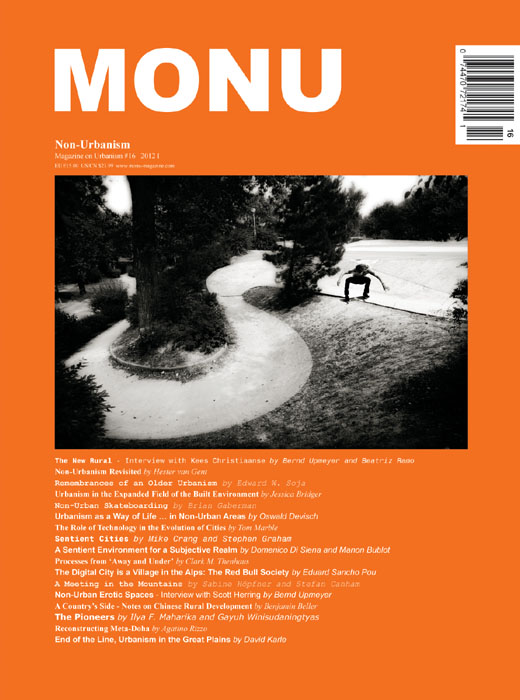
The digital city is a village in the Alps. The RED BULL Society.  (Artículo publicado en MONU #16 - NON-URBANISM, Abril 2012,  Rotterdam- Holanda)
RealizacionesPróxima

The digital city is a village in the Alps. The RED BULL Society. (Artículo publicado en MONU #16 - NON-URBANISM, Abril 2012, Rotterdam- Holanda)

In the digital city, I am awakened by a cow. Not its lowing, but rather its bell, clanging louder than the loudest alarm clock. I am in Fuschl am See, a charming Austrian village on the edge of a no less charming lake. Idyllic all around, wooden houses everywhere ringed by mountains. Just 10 minutes away is St. Gilgen, where Mozart's mother was born and 20 minutes away along a winding road is Salzburg, the city of music. But Fuschl am See is also home to Red Bull, the multinational that sells the world’s most famous energy drink and has revolutionized the concept of sports sponsorship. All of this happens from here, from a place where everything seems terribly boring and isolated from the world. No one would say this village is a digital city.

The changes are subtle. The hotel is sturdy and comfortable. I go down to breakfast and the entire buffet is terribly Austrian, even the coffee. At one table sits Sebastian Vettel, the Red Bull Formula 1 racer. He is accompanied by a few people who are also wearing T-shirts bearing icons of the drink, because the stars Red Bull sponsors come here to train, to take part in the stage. And most of all to have photos taken with which to flood the digital world. Today it is Sebastian, but yesterday it was Henry, the famous soccer player from the French national team who has left Barça to join the New York Red Bulls. They come to a town where no one bothers them, where fame has no consequences, to enhance that fame worldwide.

I leave the hotel and stroll around the village. There is a church, a school, two supermarkets and a slew of houses and apartments for rent. There is a pier overlooking the lake and public swimming pools. All comfortable. All quiet. All exactly the same. You can’t tell who is rich, because the truth is that they are all rich in their own way, since they live in such a privileged place.

Across the road at the end of town are the Red Bull Gmb headquarters. The two main buildings are cones with sliced-off points. The client wanted them to be crater-shaped and somehow it is true that the fire is alive and that infinite data are transmitted to the digital network from there. Four hundred people from all over the world work here. The lingua franca is English and everyone appreciates the quality of life and level of Austrian taxes, one of the EU’s lowest. They are just passing through. Their houses and cars are paid for, because in this new Levittown, you need a car to breathe, to live and especially to escape from such perfection.

The Company controls everything. The Company pays the meals of its employees, who are free to choose the restaurant they wish to dine in every day: the pizzeria by the lake, the sober hotel or the new hotel. They are housed in Company housing. All of it is lovely. And if you rise up in the Company, you have more and more windows with views. It is not a gated community on a physical level. There are no visible barriers, because all the barriers are intangible. If you get sacked, you cannot stay. First, because there is no available supply. Red Bull has bought everything up. Or at least it bids on everything, disrupting the market, while enhancing the value of its assets because of the lack of demand it constantly creates. It has become a feudal lord only because of its employees, a lord that everyone - from hoteliers to politicians - never cease to entertain, because they know that without it they’d never be on the map. In the geographical sense yes, but not digitally.

The new communities bear little resemblance to the gated communities that have been sold to us at astronomical prices until recently. We were led to believe that the future would take place behind a fence with private security, a clubhouse, tennis court and a heated pool. Big mistake. Those barriers that separated us from the world had the function of uniting us with our neighbours, so we could socialize. Of creating a perfect world away from the pollution of the outside world. A mistake, because many people turned to mortgages they cannot keep up with in order to buy that house and furniture and all the rest. And all these amenities, these private gardens and private pools and private security guards are the first to go when you’re broke. The problem is that if you don’t pay, your loving neighbours begin to hate you, to point to you as a debtor and install fingerprint detectors to bar entry to the clubhouse. And that's when you realize that the enemy is inside your residential estate and that this entire wonderful community life is based exclusively on paying fees - and that if the fees are not paid, it means war. People try to sell the houses and nobody wants to buy them, since they are so costly to maintain; it all falls apart with an air of impending doom. In contrast, everything in Fuschl am See is discreetly cosy. Probably because there is a mechanism to ensure your expulsion if you’re not useful to the system. The territory will unceremoniously eject you. In digital cities, the barriers are not physical, but rather economic.

I get in the car and head down the road. I see greenery and cows, but mostly order. My specific destination is Salzburg Airport, Hangar 7. The Navigator takes me there directly. The entire building is made of glass. It's an enormous nave designed to attract the public. On one side is a street and a huge parking lot; on the other, a runway. You enter the hanger and a billionaire’s toy museum appears. Formula 1 cars, race cars, planes, helicopters, jets, all of which are spattered with Red Bull logos. It is a combination museum-gallery that sells glamour. It peddles Red Bull’s image to fans, consumers and TV viewers. It's a trade show with a permanent venue where the products are changing constantly. Across from it is Hangar 8, a machine shop where newly landed artefacts from all over the world are cleaned up. And when they are ship-shape and ready once again, they are taken to Hangar 7 for the public’s enjoyment.

You can eat, drink coffee or buy souvenirs in Hangar 7. You can have a drink at the bar with glass floors suspended from the ceiling. And you think you might see or photograph a star there. It is a huge plateau with lights and music that seeks to generate its own content every day to sell an image, a brand. And few of us realize that it is actually a set where we are turned into characters in the Truman Show.

The key to the digital city is ubiquity, omnipresence. Being able to spread your message anywhere in the world. And to do so, all you need is enough runway to pick up speed and lift. From above, only greenery and more cows can be seen. We can only detect digital cities through the media.