Logo Fundación Arquia
Logo

Centro de documentación FQ

Si aún no lo conoces te explicamos Qué es el Centro de Documentación FQ de Fundación Arquia

Contacto

Sede Oficinas

C/Barquillo, 6, 1º izda. 28004 Madrid

Sede Actividades Culturales

C/ Tutor, 16. 28008 Madrid

91 756 10 50

centrodocumentacion@arquia.es

Suscríbete

Suscríbete a nuestro boletín para estar al día de las últimas novedades y lanzamientos.

Al suscribirte, aceptas nuestra Política de Privacidad y das tu consentimiento para recibir actualizaciones de nuestra empresa.

© 2026 Centro de documentación FQ. Todos los derechos reservados.

Política de cookiesPolítica de privacidad
Centro de documentación FQ
InicioCatálogoCiclos
Logo

Centro de documentación FQ

InicioCatálogoCiclos
EX-CITIZENS. GANADOR EUROPAN 9 KAPFENBERG (AUSTRIA) | Arquia - Centro de Documentación

Cargando realización...

  1. Inicio
  2. /Catálogo
  3. /Realizaciones
  4. /EX-CITIZENS. GANADOR EUROPAN 9 KAPFENBERG (AUSTRIA)
RealizacionesPróxima

EX-CITIZENS. GANADOR EUROPAN 9 KAPFENBERG (AUSTRIA)

enrique arenas y luis basabe, arquitectos

Galería realización

ex-citizens ex-1 (prefix) 1. out: exclude. 2. referring to removal or release: excommunicate. 3. referring to a former state: ex-husband. — OR. Latin ex ‘out of’. ex-2 (prefix) 1. out: exodus. — OR. Greek ex ‘out of’. (Cf. Oxford English Dictionary, ed. 2003)

Descripción

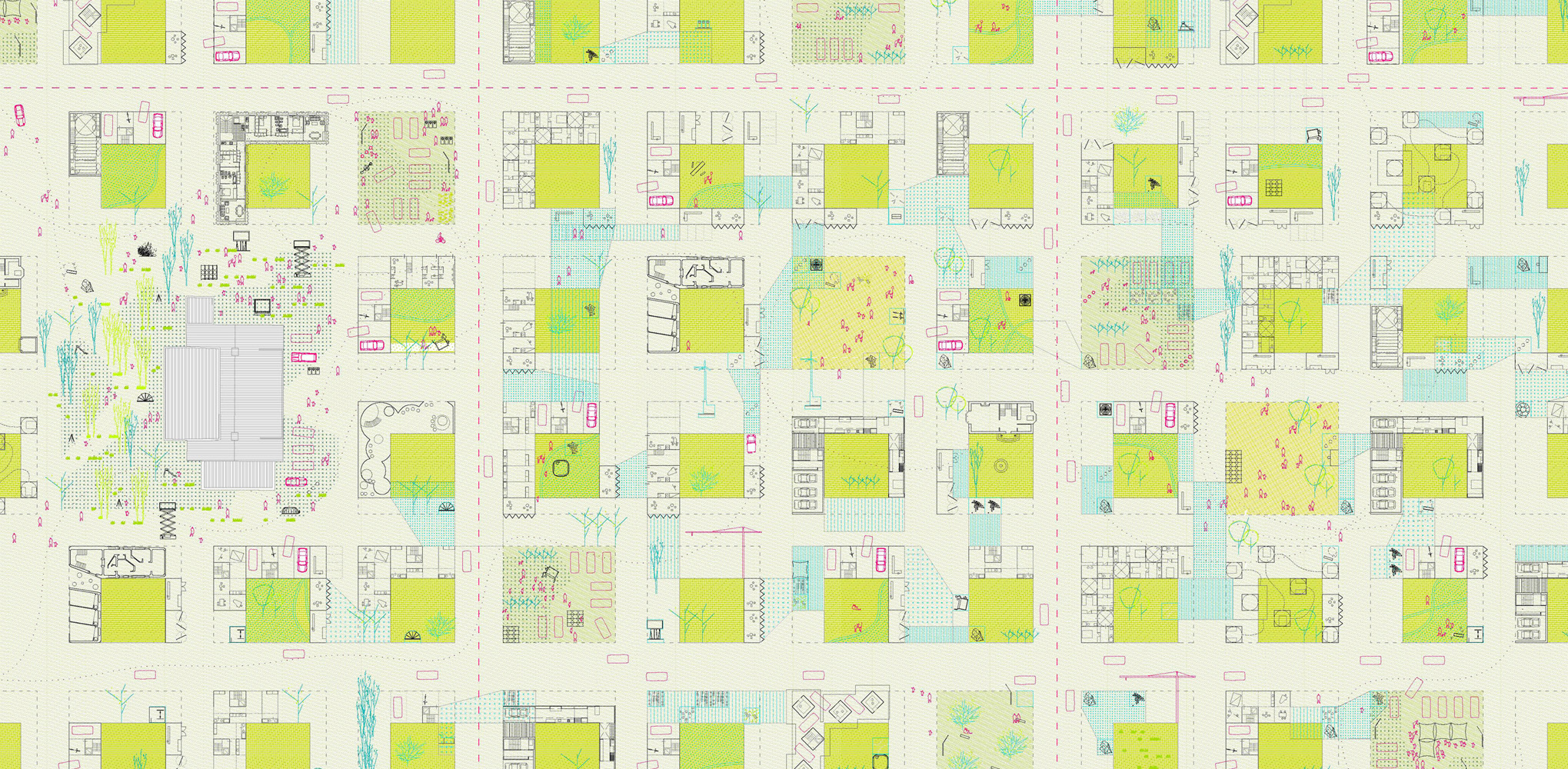
Diemlach is a paradigmatic suburban extension. In contradiction with its rural morphology, it is a deeply urban place: the diffuse limit of a diffuse city, structured by one-family houses, fences and allotment gardens.

In such a contemporary typology, it is possible to read a legitimate option of the inhabitants, who choose to abandon the modern city, stunned at its thunderous failure. They become then somehow ex-citizens, and inhabit what we (from the city) call the sub-urbs.

This work tries to give some answer to the dissolving city, and also to the ex-citizen who, running away from a city in which he does not believe anymore, seems to be entering an even worse net of ultra-privatisation and dissolution, not only of the urban, but also of community itself.

[BORDER]

In the border of the city the ex-citizen is looking for nature. But his ‘lost innocence’ is irrecoverable, and the result is that he brings the urban into the natural.

The limit is not clear: Who colonises whom? Here, the crash of a suburban structure with a radical natural environment is deliberately not solved, and the question remains alive.

[PROPERTY]

Fences subdivide the territory in small properties, substituting the lost order of the city. But community gets also lost here, because it cannot exist without public space.

In Diemlach private property is atomised, discontinuous and dispersed: being brought to its last consequences and so downplayed, it becomes extremely interchangeable. The suburb becomes alive in its very heart, in property relationships themselves.

[DISPERSION]

The fundament of suburban dispersion is the market’s obsession for the object. A product is that, what can be sold, and a product is always an object.

The dispersion is here brought to its last consequences: a new texture arises and objectuality is placed in its right place, becoming the fundament of interchangeability. The whole becomes a field where the relations of the (ex)citizens can configure a new beginning for their community.

[URBAN LIQUIDITY]

The result is somehow an improvement of the post-modern suburb. House and city are no more mere products: they are (again) open to a process; they become themselves a process, a liquid that adapts to their changing social reality.

Autoría y colaboradores

Autor

Luis Basabe Montalvo
Enrique Arenas Laorga

Información

Clasificación / Tipología

Urbanismo

Dirección

KAPFENBERG, STEIERMARK, AUSTRIA

Sección

Próxima
II Edición 2008-2009
2010
III Edición 2010-2011
2012

También te puede interesar

SEMILLAS Y VECTORES. GANADOR EUROPAN 9 BADAJOZ
RealizacionesPróxima
,

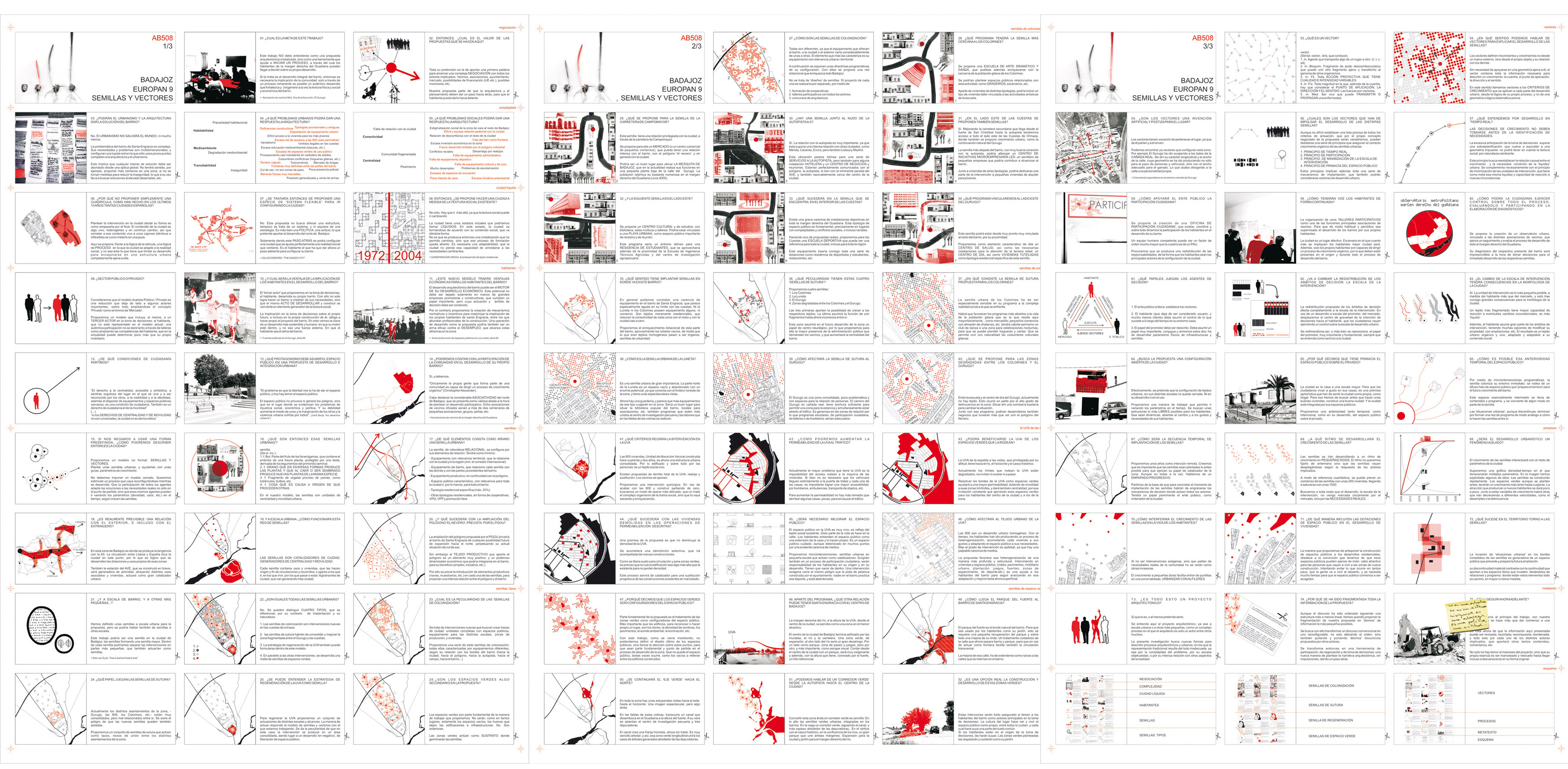
SEMILLAS Y VECTORES. GANADOR EUROPAN 9 BADAJOZ

a. El objetivo de este trabajo es dar comienzo a un proceso: una primera palabra en una compleja negociación con numerosos actores, especialmente con los propios habitantes. La problemática es muy compleja, y la arquitectura podrá dar respuesta a una pequeña parte. El urbanismo no salvará al mundo, al menos no él solo.
gartenHOF. GANADOR EUROPAN 10 VIENA (AUSTRIA)
RealizacionesPróxima
,

gartenHOF. GANADOR EUROPAN 10 VIENA (AUSTRIA)

garten>HOF ¿cuál es el papel del arquitecto en la configuración de una ciudad que se muestra, cada vez más, como una realidad extremadamente compleja y cambiante?
Belhuis at the IABR: Rotterdam Belhuis Web Guide & Moroccan Cyber Chill Out
RealizacionesPróxima

Belhuis at the IABR: Rotterdam Belhuis Web Guide & Moroccan Cyber Chill Out

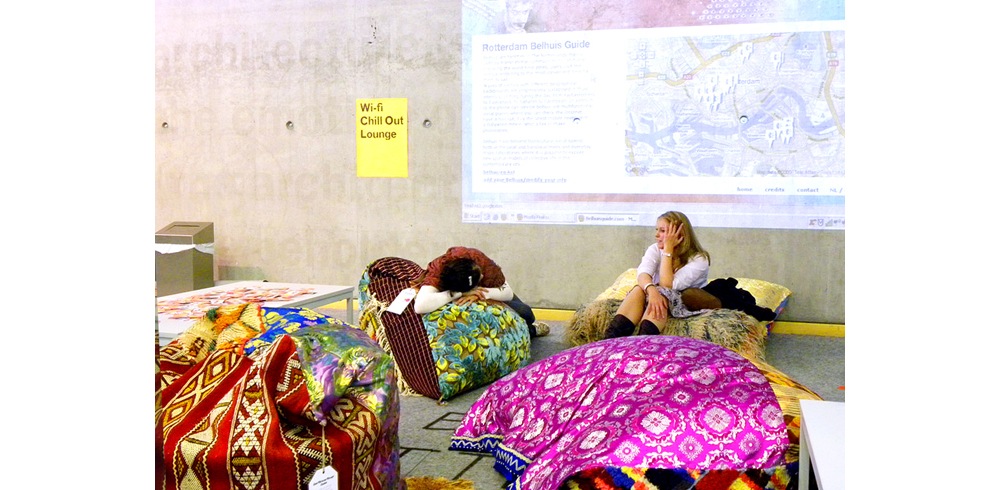
Husos presenta "Belhuis at the IABR: Rotterdam Belhuis Web Guide & Moroccan Cyber Chill Out." Un proyecto para la 4ta Bienal Internacional de Arquitectura de Rotterdam. Comisarios Kees Christiaanse, Tim Rieniets, Fabienne Hoelzel. Cyber Moroccan Chill Out: Diego Barajas, Camilo García y Amabel García, colaboración de María Antón. Netherlands Architecture Institute. Rotterdam. Septiembre 2009 a Enero 2010.
Architecture & Adaptation: Evolutionary Theory of Space through an Artificial and Individual Human
Proyectos de investigación

Architecture & Adaptation: Evolutionary Theory of Space through an Artificial and Individual Human

Architecture & Adaptation: Evolutionary Theory of Space through an Artificial and Individual Human Being

(Double PhD Research: Never finished, as I need this NY support).

----

(…) We live in a material society, without conscience, and why deny it: hypocritical, with a tendency towards depression, loneliness and isolation. Is architecture related to any of these?

Darwin’s Theory of Evolution states that human beings, as animals, have a penchant for improvement and a tendency to adapt to their surroundings.

Applying this to our way of life, I might ask: Are we the ones adapting to the architecture of a place, or is the architecture of a place adapting to us?

I think the answer is fairly simple: it’s impossible that architecture, something already existing, adapts to us.

But now, what or who is adapting to what?

We have lost the essence, we are adrift and can’t seem to find our way. I recapitulate: Is architecture adapting to people or are we the ones adapting to architecture?

It is a given that something as insignificant as a person, we, the “homo ludens”, can’t control the power of space or the architecture of a place, so the answer must be obvious and clear, no matter how objective we pretend to be, or how we wish it so.

This first installment is also a criticism towards us, architects, with a tendency towards the beauty of a finished building instead of the feelings it would evoke on the people around it.

We must be the ones adapting to the architecture of a place, traditional or not, and to everything around us. We will make it ours, and only then will we control it: Consciously or unconsciously.

Now that the animal, primate, has become man, “homo ludens”, does he adapt to his surroundings?

From my point of view, there are two different answers:

- There are people who are so used to migration and displacement that forget that architecture, and therefore our surroundings, are truly there. Those who unfortunately perceive them (including myself, even if as an architect I shouldn’t), distinguish space as something merely aesthetic or even non-existent.

That is to say, architecture is transformed into something temporal that doesn’t truly exist but is there, always present in a lifestyle of travel and migration. We are so used to moving, that we don’t stop to analyze why are we able to adapt to a way of life that is so utterly different.

All beings think that they don’t fully care about their surroundings, but truthfully, they are capable of adaptation, of processing the architecture of a place, regardless of where that place is, not minding cultural barriers, or even language or climate.

Meaning, that for better or worse, humans adapt to architecture, and in the same way, architecture and space are always unconsciously present in the minds of the people.

- On the other hand, and as I said in the beginning, other types of people also exist. There are ones who associate architecture with something permanent, who are not used (even if it doesn’t sound right) to knowing what exists beyond their front door, and think that is everything that exists in the whole world. They lack spatial awareness. We talk about space because it is truly a sixth sense, always present in ourselves.

These individuals don’t believe in the possibility of architecture existing beyond the four walls of their bedroom, and they don’t want to see, or don’t know, that the culture and tradition of a place leave a mark in a person’s lifestyle.

This, is a fact. There are two kinds of people:

Those that by default move, and the ones who remain static. What they don’t know is that both are affected by the inception of space, they don’t realize that the architecture of a place not only conditions their way of life, but also the way they live in our society, as Darwin mentioned.

I will name these kinds of people the following:

Divergents (those who don’t belong anywhere, but at the same time belong everywhere, as they are temporal, and are the ones included in point 1), and the ones that belong to group 2 (static and permanent, that sooner or later will have to evolve), and called “Homo Ludens”.

Summarizing: DIVERGENTS vs HOMO LUDENS (…)

The digital city is a village in the Alps. The RED BULL Society.  (Artículo publicado en MONU #16 - NON-URBANISM, Abril 2012,  Rotterdam- Holanda)
RealizacionesPróxima

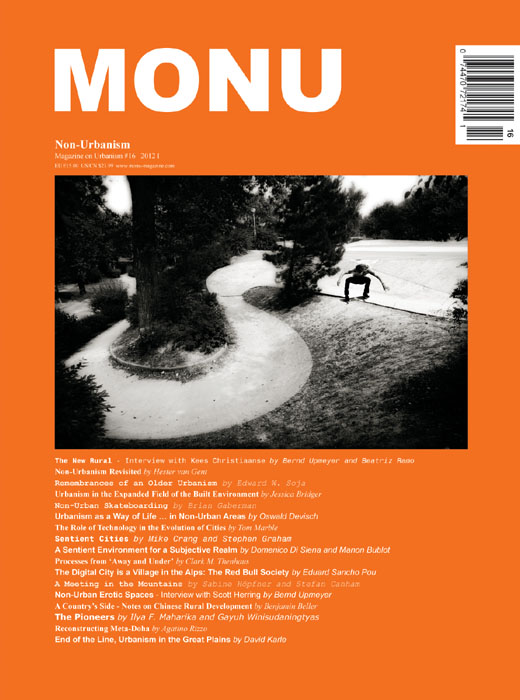
The digital city is a village in the Alps. The RED BULL Society. (Artículo publicado en MONU #16 - NON-URBANISM, Abril 2012, Rotterdam- Holanda)

(…)This 'bridging' will occur only partially through physical manifestations, but largely through otherwise 'invisible' structures and open-source processes and networks. Although the limits of digital cities are usually not physical, but, for example, economic as Eduard Sancho Pou describes in his contribution "The Digital City is a Village in the Alps: The Red Bull Society", one might find - especially in non-urban areas - "Truman Show"-like physical manifestations such as the village of the multinational corporation "Red Bull".(…) excerpt by Bernd Upmeyer, Editor-in-Chief
VIATICUS
RealizacionesPróxima

VIATICUS

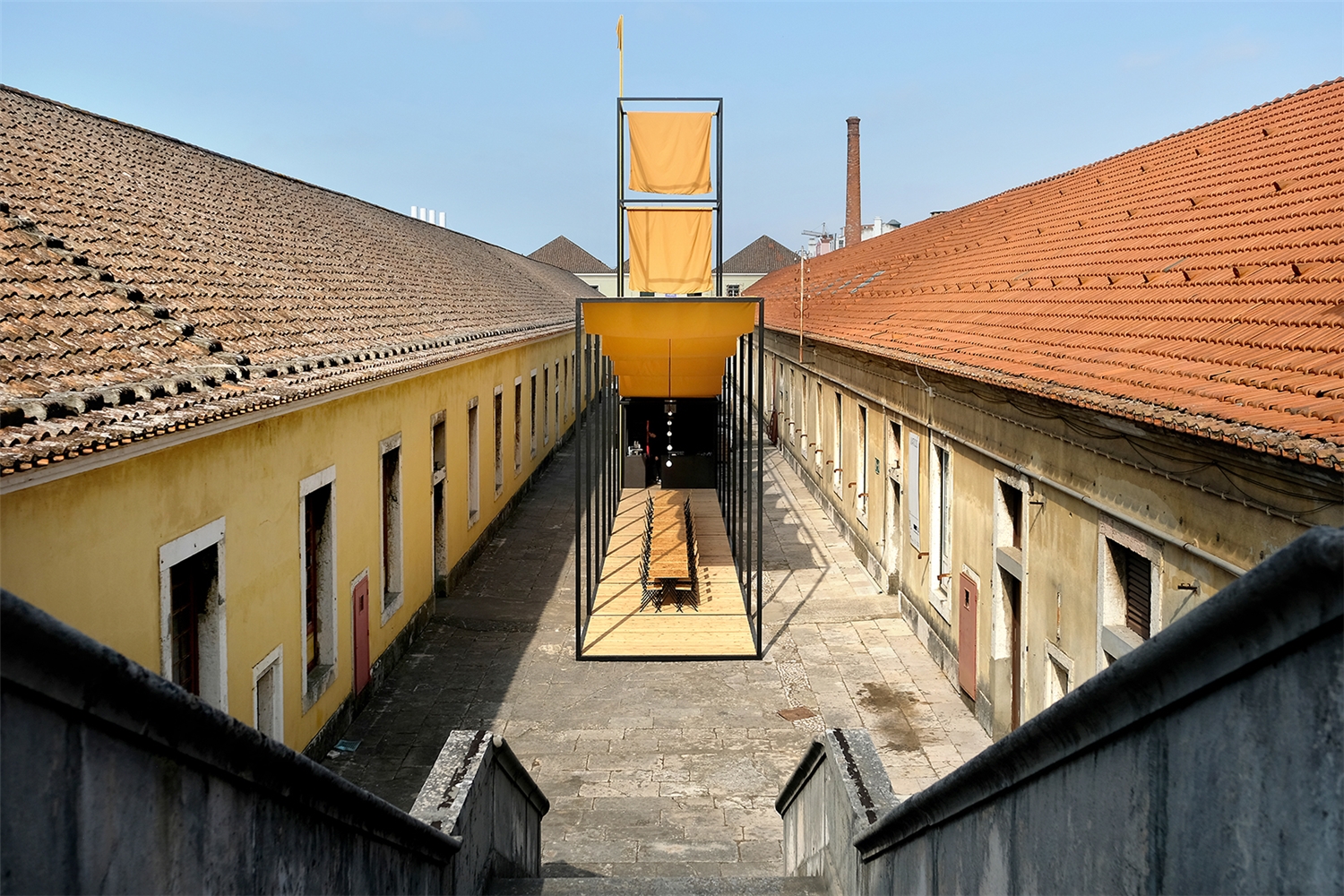
Pabellón en el pátio del edifício de la cordoaria nacional (património) para restaurante temporal durante la feria de arte contemporáneo ARCO.lisboa. 2018, Lisboa, Portugal.